

- Docente: Rosanna Asselta
- Docente: Giulia Maria Emilia Antonietta Soldà
- Docente: Raffaella Bonecchi
- Docente: Valeria Cento
- Docente: Marinos Kallikourdis
- Docente: Carlo Perno
- Docente: Maria Rescigno
- Docente: Meri Seppo
- Docente: Eduardo Bonavita
- Docente: Raffaella Bonecchi
- Docente: Cecilia Garlanda
- Docente: Alberto Mantovani
- Docente: Isabella Cinzia Barajon
- Docente: Sebastiano Bariselli
- Docente: Riccardo Fesce
- Docente: Carolina Magdalen Greco
- Docente: Roberto Rusconi
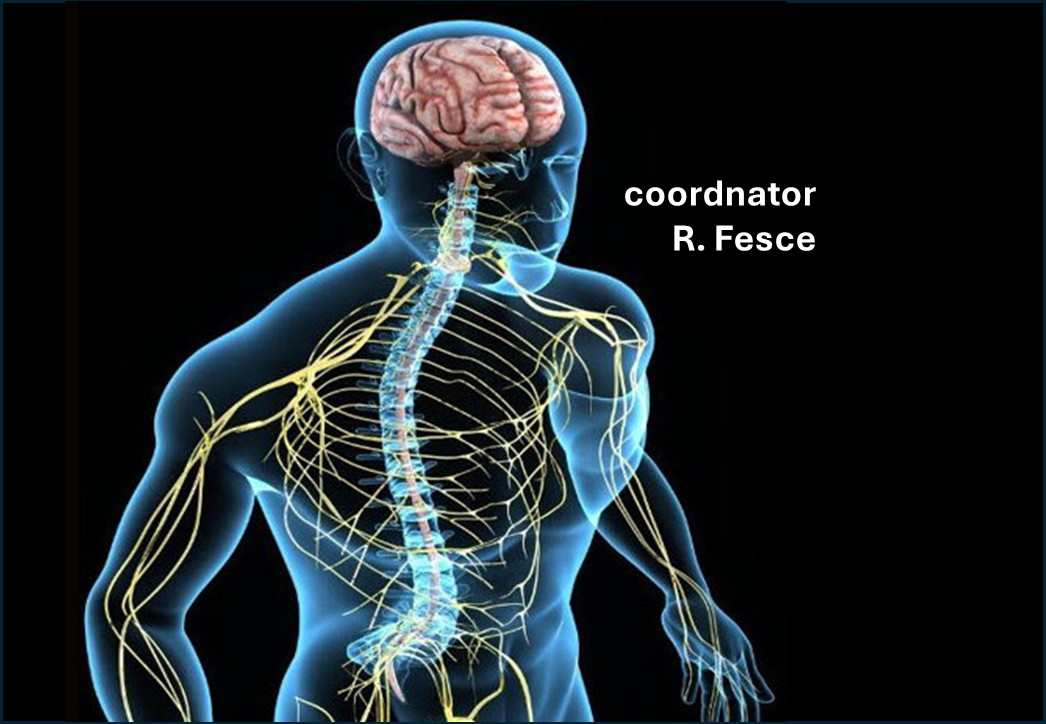
BODY at WORK 1
2nd year -- 1st semester
13 credits (Anatomy 3, Physics 2, Biochemistry 2, Physiology 6)
Coordinator: Riccardo Fesce
Faculty: Anatomy: Isabella Barajon; Physics: Roberto Rusconi; Biochemistry: Carolina Greco, Matteo Fossati (Gherardo Mazziotti); Physiology: Riccardo Fesce; Basis of Neurological examination: Isabella Barajon
Objectives
This is the first part of a complete journey through the mechanisms that sustain life and the functioning of the human organism. It builds on the knowledge acquired in first year courses, which is indispensable to profitably follow the classes.
The students will learn about the structure and function of neurons and the role of synaptic plasticity in memory and learning; they will acquire a solid knowledge of the organization and functioning of the sensory and motor systems and the competence to understand and recognize the main neurological problems related to their dysfunction.
The students will also be introduced to the principles of the neurological examination.
Key physical, biochemical and anatomical aspects are addressed, in a functional and Pathophysiological perspective, in specific lectures or in joint lectures, to help the student to acquire a comprehensive, interdisciplinary perspective.
Note: attendance of the classes is mandatory.
The course includes Collaborative Learning sessions and integrated lectures on Priority Presenting Problems, aimed at promoting meaningful learning by the students. Conceptual maps (CMAP) are employed to organize complex sets of information by creating a hierarchy and linking information from different domains.
Such training should help the students to reach a higher level of learning and understanding.
The course also includes PhysioLab experiences to practice with physiological measurements (electro-myogram and electro-oculogram).
A medical doctor must be able to understand and explain clinical issues with appropriate terminology and clear sentences organized in a logical flow. As a further aspect of professional training, students will be actively involved in producing and discussing elaborates on the course topics, and an important part of the final evaluation will consist in an oral interview.
Professionalizing activity: the course includes two practical activities on the neurological examination of the patient.
Attendance to these activities is mandatory. Students who miss them or fail the related written test will not be admitted to the first two calls of the Body at Work exam. A remediation test session will be held at the end of the 2nd semester.
Prerequisites: In order to be able to take the exam the students must have passed the following 1st year exams: Building Bodies: from gametes to organs; Principles of the living matter; Body architecture; The Cell: Functions and control.
However, in order to profitably attend the course, the students must absolutely have acquired the main concepts of cellular function and regulation and the basis of neurobiology (cell excitability, receptors, transduction mechanisms), they must know the gross anatomy of the body and the structure of the tissues; they should master the principles of embryology, cellular biochemistry and control of gene expression.
Assessment -- The exam is comprised of two parts: Written test and Oral examination
1. Written test: Multiple Choice Question or similar test.
The test is divided in two sections/levels:
a. Basic, essential knowledge: 20 questions that concern concepts that the students must absolutely have acquired --- All these questions must be answered correctly to proceed
b. Further knowledge: 45 questions (15 Anatomy, 9 Physics, 9 Biochemistry, 12 Physiology)
Time allotted: 90 minutes. Two thirds of the second group of questions must be answered correctly (30/45). The mark for the written will be given by 18+(correct answers-30).
Students who passed the written test do not need to repeat it if they take the oral during the same exam session.
The oral interview will assess the competence of the student in explaining how the structural aspects, the biophysical-biochemical mechanisms and the physiological processes contribute to synaptic function, the generation and elaboration of sensory information, to motor programming and control, and to muscle function.
The above-mentioned Basic, essential knowledge consist in mastering essential concepts of general biology and those treated in the classes: they are highlighted in the syllabus. Being confused or not being able to talk about any of these concepts will prevent passing the oral interview.
- Docente: Isabella Cinzia Barajon
- Docente: Riccardo Fesce
- Docente: Matteo Fossati
- Docente: Carolina Magdalen Greco
- Docente: Roberto Rusconi
